
In October 2019, my husband Patrick and I received the news we had been waiting for—we were expecting our first child, a baby girl. We were overjoyed and couldn’t wait to start this new chapter of our lives. Little did we know, our excitement would soon be overshadowed by the overwhelming fear of an unexpected diagnosis that would alter the course of our pregnancy and our lives forever.

At our 16-week ultrasound, we were blindsided by devastating news. We learned that our daughter, whom we had already named Scarlett, had been diagnosed with congenital diaphragmatic hernia (CDH). The left side of her diaphragm had failed to form, causing her stomach, spleen, intestines, and most of her liver to shift into her chest. Her heart had been pushed all the way over to her right chest wall, and both of her lungs were severely underdeveloped—her left lung was nearly nonexistent, and her right lung was equally small. The doctors informed us that Scarlett’s chances of surviving after birth were less than 20%. We were crushed. But amid the heartbreak, there was still a glimmer of hope—we knew that Scarlett was a fighter, and we were determined to give her every chance to survive.
Over the course of my pregnancy, Scarlett was closely monitored. I underwent 27 ultrasounds, two non-stress tests each week, two fetal MRIs, and a fetal echocardiogram. We met with numerous specialists who carefully explained that CDH has a range of severity. Unfortunately, Scarlett’s case was on the severe end of that spectrum. The reality of her condition was grim, but we didn’t give up. After consulting with several hospitals, we made the difficult decision to leave our home in Knoxville, Tennessee, and relocate to Cincinnati, Ohio, where we could get the specialized care Scarlett needed.

On the day of Scarlett’s birth, we arrived at Cincinnati Children’s Hospital with a team of more than 30 doctors and nurses ready to provide immediate care. Scarlett was delivered via a planned C-section, and she was intubated and placed on a ventilator before she was even fully removed from my uterus. This procedure, known as an EXIT to airway, allowed the medical team to ensure Scarlett’s airway was secure before continuing with her delivery. Her birth was a blur of activity as doctors and nurses worked tirelessly to stabilize her, and as soon as she was born, she was whisked away to the NICU for further care.
Only 18 hours after her birth, Scarlett went into respiratory failure. She was placed on ECMO, a life-support machine designed to oxygenate her blood when her lungs were too weak to do so. Initially, the doctors were hopeful that she would only need ECMO for a short time, perhaps less than a week. But as the days passed, it became clear that Scarlett’s condition was far more complicated than anyone had anticipated. She had developed severe pulmonary hypertension, and despite all efforts, she wasn’t responding to treatment. The doctors explained that, after six weeks on ECMO and three failed attempts to remove the machine, they didn’t think Scarlett would ever be strong enough to survive without it.

It was devastating to hear those words. The thought of losing our little girl was unbearable. She had been fighting for her life since the moment she was born, and it seemed as though we were running out of options. But Scarlett wasn’t ready to give up, and neither were we. In desperation, I began researching and discovered Dr. Kays at Johns Hopkins All Children’s Hospital in St. Petersburg, Florida. After reviewing Scarlett’s case, Dr. Kays agreed to accept her as a patient, though he was honest with us about the severity of her condition. He told us that Scarlett was extremely sick and that he wasn’t sure if he would be able to help her, but he was willing to try.
Transporting a patient on ECMO is an incredibly risky procedure, but we knew it was the only chance Scarlett had left. Within 24 hours, we received insurance approval for an air transfer, and the following day, Dr. Kays and his team flew to Cincinnati to transport Scarlett to Florida. Due to the size of the plane and the equipment required, Patrick and I were unable to join her on the flight. It was one of the hardest things we’ve ever had to do, but we knew it was necessary to get her to where she needed to be. We immediately began the 14-hour drive to St. Petersburg, and we arrived the following day, eager to be reunited with our daughter.

Scarlett spent another 25 days on ECMO after arriving at Johns Hopkins All Children’s Hospital. But on August 9, 2020, after a total of 67 days on ECMO, Scarlett was finally weaned off the machine. It was a huge milestone, and we were filled with hope. The next day, she underwent surgery to remove the cannulas from her neck, and on August 17, we were finally able to hold her in our arms for the first time. It was a moment I will never forget—the feeling of having my daughter in my arms after everything she had been through was indescribable.
On August 24, Scarlett was extubated to CPAP for the first time, and we were thrilled by her progress. But just a few days later, Scarlett’s condition took a turn for the worse. She began retaining CO2 and had to be reintubated. It was a setback, but we had seen her fight before, and we knew she could do it again.
By this point, Scarlett had never had food in her stomach. She had been receiving all of her nutrition through IV TPN. The doctors decided to place a feeding tube in her nose so she could begin receiving breast milk. Unfortunately, she couldn’t tolerate even the smallest amount of food. After discussions with Dr. Kays, it was decided that Scarlett would need a G-tube, along with a Nissen fundoplication to prevent reflux. On September 28, Scarlett had her G-tube surgery, and things began to improve. But shortly afterward, we noticed swelling in her face and neck, which was eventually diagnosed as stenosis of her superior vena cava, a complication from her time on ECMO.

Scarlett was transferred to Orlando, Florida, where she underwent surgery to place a stent in her SVC. The surgery was successful, and just two days later, she was extubated again to CPAP. But our journey wasn’t over yet. On November 9, Scarlett’s heart rate began to climb, and she became unresponsive. Doctors later discovered that she had developed sepsis and was in septic shock. Scarlett remained in a comatose state for several days, and her doctors were unsure whether she would survive. She was reintubated and underwent multiple tests, including an EEG and a CT scan, which revealed significant fluid on her brain. On November 19, Scarlett had a VP shunt placed to drain the excess fluid, but complications arose, requiring another surgery to revise the shunt.
The next few months were filled with ups and downs. Scarlett had lost the use of her arms and legs, and it was unclear whether she would regain movement. But Scarlett is a fighter, and on December 10, 2020, she was successfully extubated to CPAP for the third time. Over the next several months, Scarlett’s progress was nothing short of miraculous. Her CPAP settings were gradually weaned, and on February 15, 2021, she transitioned to a low-flow nasal cannula. Eventually, it was decided that Scarlett would go home on CPAP, allowing her lungs more time to develop at home.

On March 30, 2021, after 301 days in the hospital, Scarlett was finally able to go home. Since then, she has continued to amaze us with her strength and determination. Scarlett is now enrolled in physical therapy, occupational therapy, and speech therapy, and she continues to make progress every day. Though she still faces challenges, she is thriving, and we are so incredibly proud of her.
We are eternally grateful to Dr. Kays, Dr. Stone, and the entire CDH team at Johns Hopkins All Children’s Hospital. They never gave up on Scarlett, even when the odds were stacked against her. They saw her strength when others had lost hope, and because of them, Scarlett is alive today.
Scarlett’s journey has been long and difficult, but she is a living testament to the power of hope, love, and perseverance. We are so blessed to be her parents, and we cannot wait to see what the future holds for our amazing little girl.
A Fragile Beginning, A Fierce Fight: Help Our Daughter Continue Her Journey.07

A Fragile Beginning, A Fierce Fight: Help Our Daughter Continue Her Journey
April 11 was meant to be one of the happiest days of our lives—the day we would finally meet our daughter, full-term, healthy, and ready to begin her life in our arms. We imagined the moment so clearly: her first cry, her tiny fingers wrapped around ours, the quiet joy of bringing her home. We had prepared our hearts for celebration, not for fear. But life had other plans, and everything we believed we knew about that day changed in an instant.
Months before her expected due date, my wife came to me with a look no parent ever forgets. She said she could no longer feel the baby move. What followed was a rush of panic, unanswered questions, and silent prayers as we hurried to KK Women’s and Children’s Hospital, hoping that our fears were misplaced. Deep down, we wanted reassurance. Instead, we were met with devastating news.
The doctors told us that our daughter was not receiving enough oxygen. They suspected Intrauterine Growth Restriction (IUGR)—a condition that meant her life was already at risk inside the womb. There was no time to wait, no time to hope things might improve on their own. The decision was immediate and absolute: she had to be delivered right away to give her any chance of survival.

At just 28 weeks and 5 days, our daughter entered the world weighing only 680 grams. She was so small it was almost impossible to believe she was real. I saw her for the first time through the walls of an incubator, her fragile body wrapped in wires and tubes, machines breathing for her as she fought to stay alive. In that moment, fear and love collided in my chest. We named her Lin Mya Yii Thaw—a name chosen with hope, strength, and the belief that she would survive. From her very first breath, she showed us what it meant to fight.
Lin Mya’s life began in the Neonatal Intensive Care Unit (NICU), where she would spend more than four long months. Those days blended into nights filled with the constant hum of machines and the soft alarms that made our hearts race. Every gram of weight she gained felt like a miracle. Every stable reading brought a cautious sense of relief. But the journey was never simple.
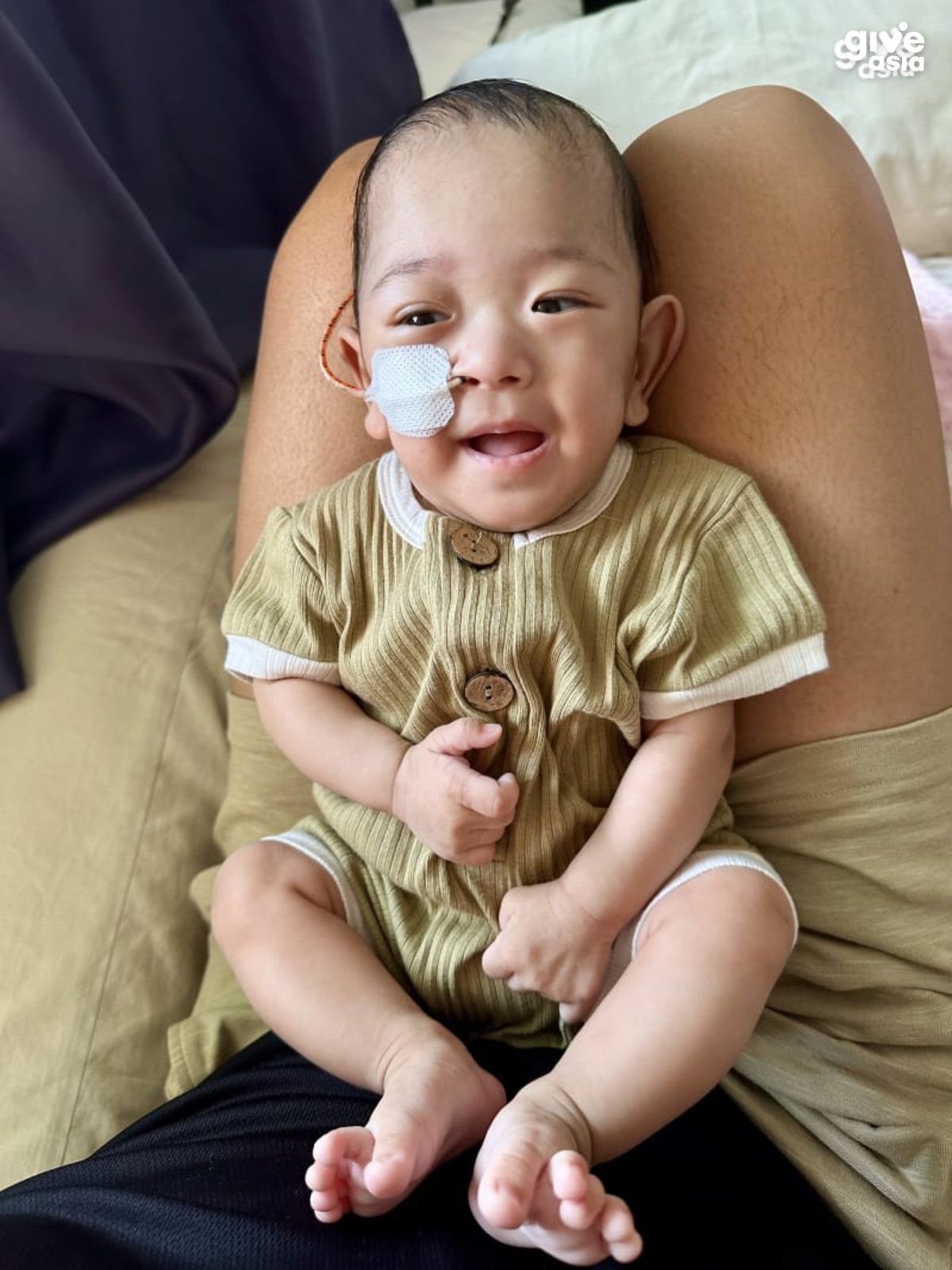
She battled breathing difficulties that required constant support. Feeding was a challenge, and each attempt felt like a test of her fragile strength. She endured blood transfusions, infections, and the painful delay of a necessary hernia surgery because her body was simply too small and weak. There were days when progress seemed to stall, when hope felt fragile, and when the fear of losing her crept in quietly but persistently.
Yet, step by step, she grew stronger.
Her heart, once a concern, healed naturally without surgical intervention. Her brain scans came back clear, defying the risks that often come with extreme prematurity. Her eye exams showed no signs of damage—a blessing we never took for granted. Each positive update felt like light breaking through a long, dark tunnel.
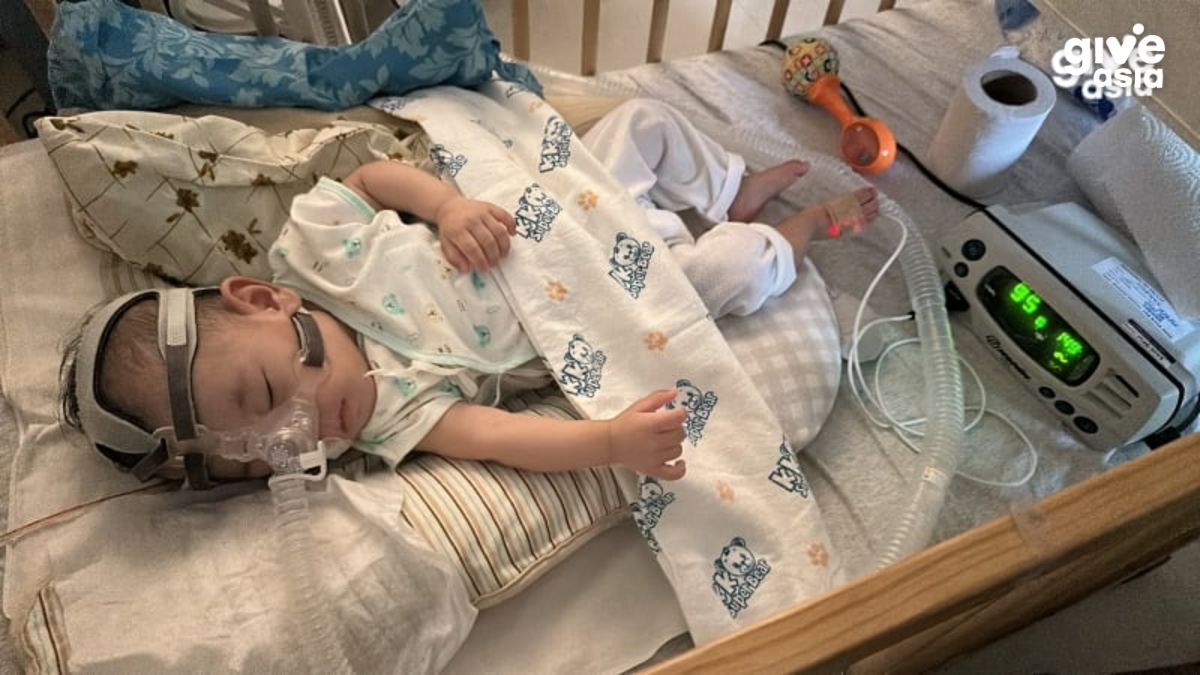
By May, Lin Mya reached another milestone: she began bottle feeding and steadily gaining weight. She passed her car seat challenge, a small but meaningful test that signaled she might finally be ready to leave the hospital. And then, on May 22, after months of waiting, worrying, and praying, we brought our daughter home.
That moment—walking through our door with her in our arms—was something we had barely dared to imagine.
Since coming home, Lin Mya has continued to grow. From 2.69 kg at discharge, she now weighs 4.6 kg. Each gram gained feels like a quiet victory, proof that her body is learning to thrive. She still faces challenges—daily episodes of regurgitation and reflux that test her comfort and our patience—but she is making steady progress.
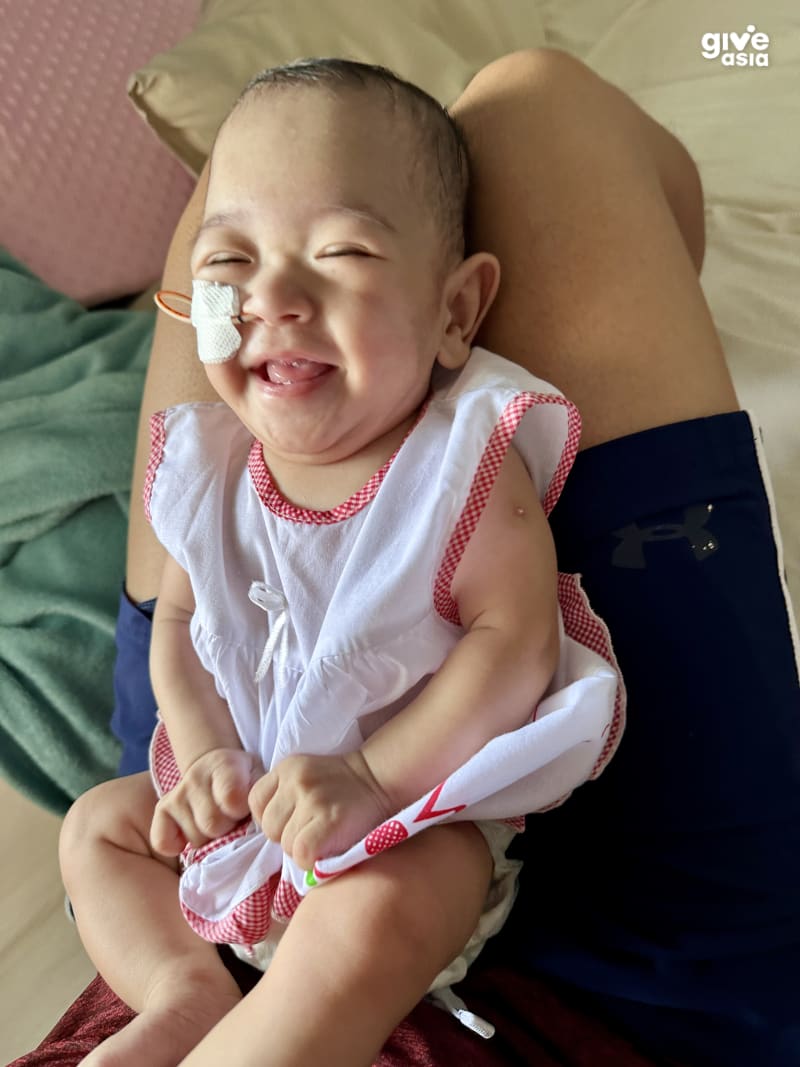
She smiles more now. She turns her head when we call her name. Her CPAP support has been lowered, and she is now breathing on room air, another significant milestone. She continues to be closely monitored by her Home Care team, and each review brings cautious optimism. We are learning to celebrate progress not in leaps, but in small, meaningful steps.

Our daughter is home. But our fight is not over.
As Permanent Residents (PRs) in Singapore, we do not qualify for the full range of healthcare subsidies available to citizens. Despite Medisave and partial support, the NICU bill alone has exceeded S$192,000. The financial strain has been immense, arriving quietly but relentlessly alongside the emotional toll of this journey. We have done everything within our means to manage the costs, but we have reached a point where we can no longer carry this burden alone.
Our immediate goal is to raise S$65,000 to help cover the most urgent medical expenses related to Lin Mya’s care. These funds will go directly toward hospital bills, follow-up care, and the support she continues to need as she grows. All donations are managed by Give.Asia and paid directly to the hospital, ensuring transparency and proper use.
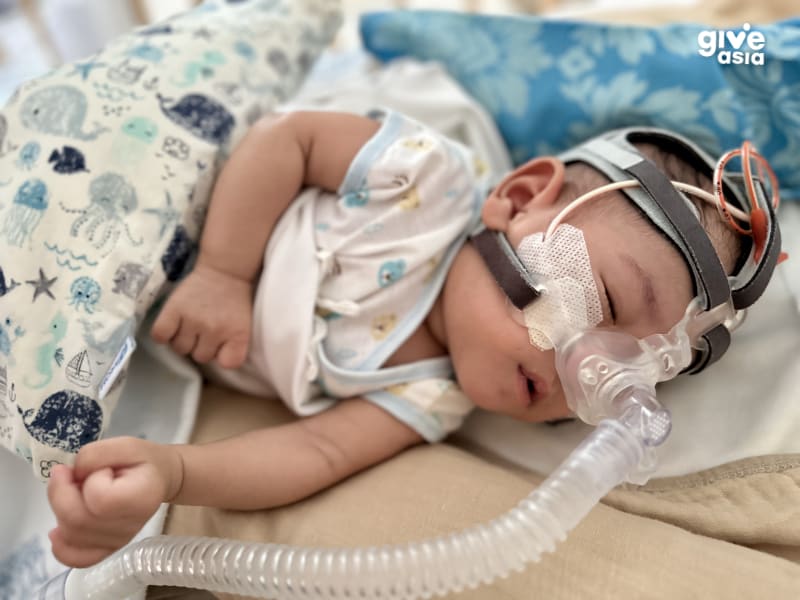
Our daughter has already beaten odds that once felt impossible. She arrived far too early, far too small, and with every reason to give up. Yet she fought—day after day, breath by breath. Today, she is growing, smiling, and living at home with us because she never stopped fighting.
We share Lin Mya’s story not just to ask for help, but to honor her strength. If you are able to support us—whether through a donation or by sharing her story—you are becoming part of her journey. Your kindness helps ensure that her future is shaped by care and hope, not by financial limitations.
From our hearts, thank you for standing with us. Thank you for believing in our daughter. And thank you for helping us continue this fight—for her life, her health, and the many tomorrows she has already fought so hard to reach.